
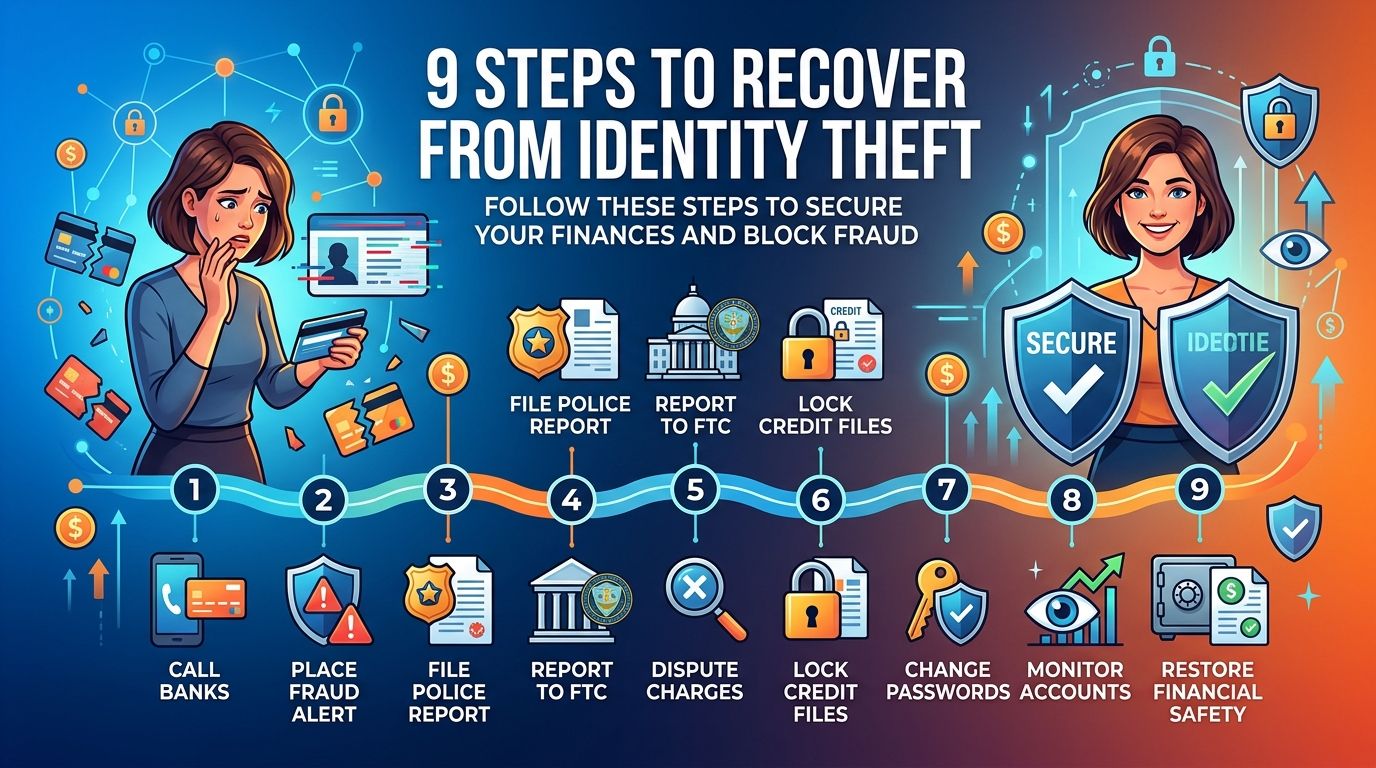
9 Identity Theft Recovery Steps to Take in Order
Following clear identity theft recovery steps helps you regain control of your finances after a painful security breach. Discovering that a stranger opened credit cards or drained your bank balance causes instant fear. You do not have to figure out this complex situation alone. Taking ordered, deliberate actions protects your remaining assets and stops ongoing damage.
Recovering your financial reputation takes time, but working through a proven sequence removes the overwhelming confusion. Each action builds a protective wall around your personal records. Knowing what to do after identity theft ensures you never miss critical legal deadlines. Let us examine the exact sequence to secure your money today.
Step 1: How to Begin Identity Theft Recovery Steps by Checking Damage
Before changing passwords or calling police, you must determine the full extent of the fraudulent activity. Review your recent checking, savings, and credit card statements line by line for unfamiliar entries. Look closely for small one-dollar charges that thieves use to test active card numbers. Check your postal mail for unexpected credit cards, loan approvals, or debt collection notices.
Pull your credit reports from the major reporting agencies to see if unknown loans exist under your name. Search for unfamiliar home addresses, secondary phone numbers, or strange employer records listed on your profile. Write down every suspicious transaction alongside the exact date, merchant name, and dollar amount. Having a complete list of compromised accounts prepares you for conversations with fraud investigators.
Step 2: Contact Bank Fraud Departments and Freeze Affected Accounts
Call the dedicated fraud department at every bank or merchant where you discovered unauthorized activity. Turn your physical debit or credit card over to dial the customer service number printed on the back. Do not call numbers provided inside unannounced text alerts or suspicious email messages. Explain clearly to the representative that a thief used your account details without your permission.
Ask the bank agent to close or freeze the compromised accounts immediately to prevent further charges. Request new card numbers and ask for fresh online banking login credentials to secure your balance. Request a formal case reference number for every dispute file opened during the telephone conversation. Ask the bank to send written confirmation of your fraud report directly to your email inbox.
Step 3: Place a Credit Freeze Across Major Reporting Bureaus
Contact the three primary credit reporting agencies to lock your personal credit files against new inquiries. Placing a credit freeze stops lenders from retrieving your credit history when someone submits a loan application. Banks automatically reject unverified applications when they cannot access your credit records. This free legal protection prevents identity thieves from opening new credit cards under your name.
You can also place an initial fraud alert on your credit report with a single telephone call or online request. A fraud alert instructs potential lenders to call your personal phone number before approving new lines of credit. Save the unique account passwords and security codes generated by each credit bureau in a safe place. You will need these security credentials to lift the freeze temporarily when you apply for credit yourself.
Step 4: File an Official Fraud Report at IdentityTheft.gov
Visit the official government reporting portal at IdentityTheft.gov to submit a formal federal fraud declaration. The interactive portal asks detailed questions about the compromised accounts, financial losses, and personal data stolen. Completing this online form creates an official identity theft report recognized by banks, creditors, and law enforcement agencies. The system also generates a customized recovery plan tailored to your specific situation.
Print physical copies of your completed federal report and save digital PDF versions on a secure drive. Your official report serves as legal proof that an imposter committed the unauthorized financial transactions. Many banks and credit bureaus require this government document before removing fraudulent debts from your accounts. Having this official paperwork accelerates your disputes and establishes a verified legal record of the crime.
Step 5: Submit a Formal Police Report to Local Law Enforcement
Visit your local police station to file an official criminal incident report regarding the identity theft. Bring physical copies of your government fraud report, government identification, proof of address, and fraudulent statements. Explain to the officer that you need an official police report number to resolve disputed bank accounts. Obtaining a local crime report provides essential legal backing when negotiating with persistent debt collectors.
Filing a police report is especially important if you know the person who stole your personal information. Creditors often demand a formal police report before clearing debts created by family members or acquaintances. Request the investigating officer's name, telephone extension, and the official police report case number before leaving the station. Store this document safely alongside your federal fraud paperwork to complete your identity theft checklist.
Step 6: Update Passwords and Enable Two-Factor Authentication
Change the security passwords across all your online profiles, starting with your primary email inbox. Your main email account acts as the master key to your entire digital identity. If a remote thief controls your inbox, they can request password reset links for all other portals. Create long, unique passphrases for every financial site using a trusted password management application.
Set up a security app on your mobile phone that gives you a new login code every thirty seconds. Adding two-factor authentication stops remote intruders even if they discover your personal account password. Avoid using text message verification codes whenever possible because scammers can intercept mobile telephone signals. Protecting your active profiles with two-step verification prevents secondary account takeovers while you clean up past fraud.
Step 7: Dispute Fraudulent Debts Directly With Creditors and Bureaus
Send formal dispute letters to every credit bureau and merchant displaying fraudulent balances on your records. Attach physical copies of your government fraud report and local police report to validate your claims. State clearly that you did not authorize the charges, open the credit accounts, or receive the merchandise. Request that the creditors close the fraudulent accounts and remove all negative reporting lines from your credit history.
Send your dispute packages using certified postal mail with return receipts requested to confirm delivery dates. Credit reporting companies must investigate disputed items and provide written responses within standard regulatory timeframes. If a creditor continues demanding payment for a fraudulent debt, send them a formal cease communications letter. Attaching your verified crime reports forces debt collection agencies to stop automated harassment calls.
Step 8: Monitor Your Credit Reports and Accounts Continuously
Understanding how to recover from identity theft requires ongoing vigilance long after the initial crisis resolves. Identity thieves often store stolen Social Security numbers and personal records to use months down the road. Set up weekly account alerts on your mobile phone to notify you whenever charges occur. Review your bank transactions regularly to catch unauthorized activity before minor card leaks turn into major losses.
Check your credit reports every few months to confirm no old fraudulent items reappear on your history. Verify that all closed accounts remain marked as settled or closed due to fraud. You can request free credit report updates directly through official reporting portals throughout the year. Maintaining active monitoring habits ensures that digital criminals cannot quietly rebuild fake debts under your legal name.
Step 9: Maintain Organized Paper and Digital File Records
Create a dedicated paper binder and encrypted digital folder to store every document related to your case. Log every telephone conversation with bank investigators, credit bureaus, police officers, and government agents. Record the exact date, time, representative name, phone number, and case reference code for every call. Store physical receipts for certified mailings alongside written dispute confirmation letters from creditors.
Organized recordkeeping saves immense time when following up on slow disputes or handling secondary billing notices. Having immediate access to case numbers allows you to resolve unexpected collection calls in minutes. Keep your recovery files in a secure location inside your home even after clearing all fraudulent accounts. Thorough documentation protects your credit reputation if lingering questions arise about past unauthorized debts.
Take Ordered Action to Restore Your Financial Safety
Recovering your financial identity takes patience, but following a structured plan reduces stress and stops further harm. Working through these steps in order ensures you lock your accounts, establish legal proof, and clear fraudulent debts. You do not need to resolve every problem in a single afternoon to make real progress. Completing one or two urgent tasks today begins the process of reclaiming your financial life.
If you need guided next actions tailored to your exact scenario, structured help is available right now. You can use our free VastOutlet Crisis Action Planner at https://www.vastoutlet.com/crisis-planner to get clear instructions for your situation. Taking a few organized steps helps you navigate the recovery process with total confidence and peace of mind.
Worried this happened to you?
Our Threat Rating Engine can analyze suspicious URLs, email addresses, or cryptocurrency wallets associated with potential scams.
Scan suspicious linkarrow_forwardProtecting Your Digital footprint
Once you have identified these threats, taking immediate action is essential. Do not delay banking checks or changing passwords. By locking down your account security policies and setting up credit monitoring blocks, you can completely isolate yourself from modern credential-harvesting networks.