
Can You Get Your Money Back From a Scammer? Here's the Real Answer
Learning how to get your money back from a scammer depends heavily on how you transferred the funds and how quickly you react. Discovering that you sent cash to a dishonest person creates immediate anxiety and frustration. You want clear answers about whether you can recover your stolen assets. The honest reality is that recovery is possible in some situations, but success is never guaranteed. Act instantly to contact your payment provider to maximize your chances of getting funds returned.
Why the Payment Method You Used Matters Most
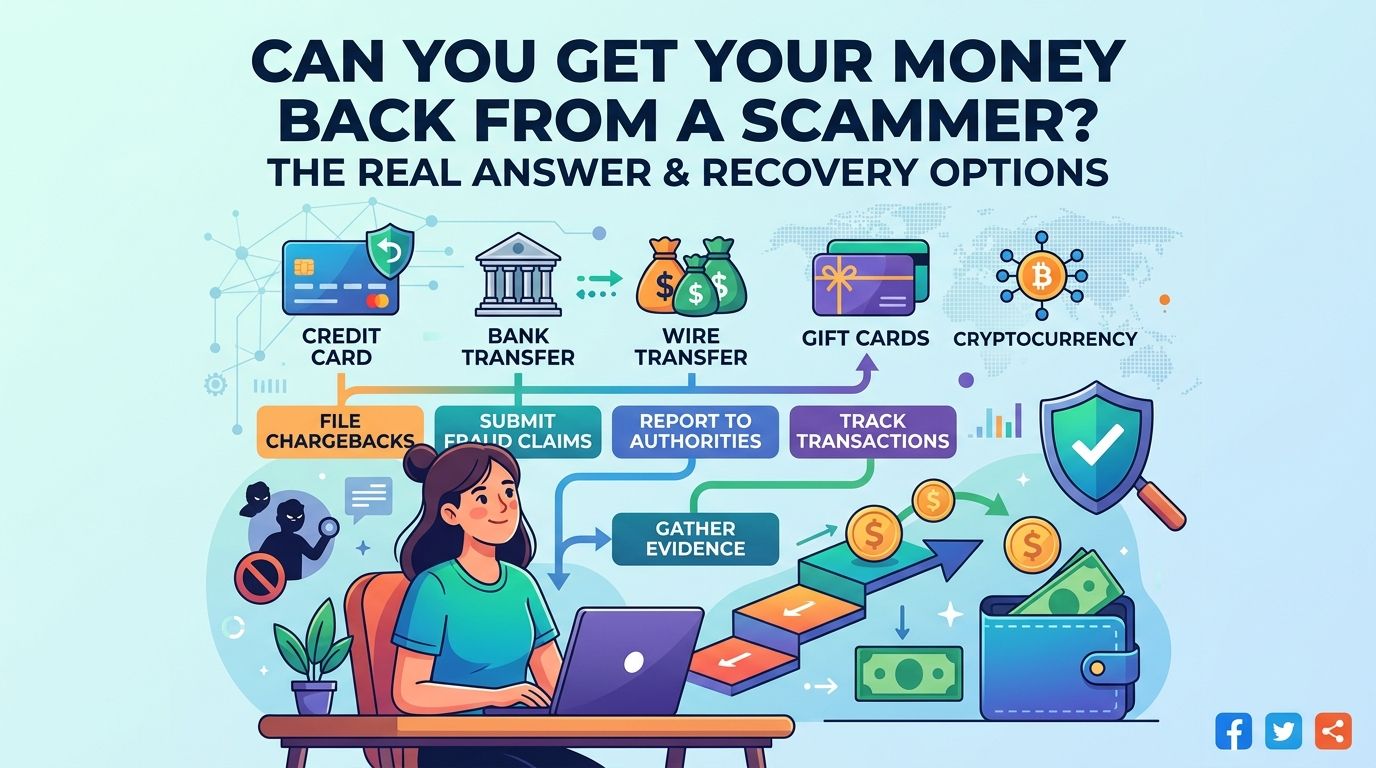
How you sent the money determines what legal mechanisms and financial rules exist to help you. Financial institutions handle different payment types through distinct clearing systems and consumer protection frameworks. Credit card transactions offer some of the strongest consumer protections available today. Card issuers allow you to dispute fraudulent charges through a formal chargeback process.
Bank transfers and direct account payments carry moderate protection options depending on the exact circumstances. If a thief accesses your checking account without permission, federal laws shield your liability. However, when you approve a transfer yourself, banks treat the payment as authorized. Recalling a completed wire or instant transfer requires fast intervention before the recipient withdraws the cash.
Digital gift cards, wire transfers, and cryptocurrency payments operate under much stricter technical limits. Scammers favor these payment channels because funds transfer across network boundaries almost instantly. Once a thief redeems a gift card code or moves digital coins, reversal options become rare. Financial networks cannot pull back settled transactions without the recipient's consent or a formal court order.
What to Do Immediately, by Payment Method
If you paid using a credit card, contact your issuing bank right away to report the fraud. Tell the customer service representative that you want to dispute a fraudulent transaction. Explain that the merchant lied about the service or that a scammer tricked you into paying. Your card issuer can freeze the pending transaction, cancel your compromised card, and issue a fresh card. They will open an investigation and credit your account temporarily while reviewing your claim.
If you transferred funds through a checking account, bank wire, or instant payment app, call your bank immediately. Ask to speak directly with the fraud department rather than general customer support. Explain the situation clearly and request an emergency recall of the transferred funds. If the recipient bank account remains active, your bank can send a formal recall request to the receiving institution. While the receiving bank cannot guarantee a refund, acting within hours improves the likelihood of freezing the funds.
If you purchased store gift vouchers and shared the codes, contact the issuing company's fraud team instantly. Look for the customer service phone number printed on the back of the physical voucher or digital receipt. Provide the customer support representative with the exact voucher numbers and purchase records. If the scammer has not redeemed the balance yet, the company can freeze the remaining funds. They can then transfer the remaining balance to a fresh, secure replacement voucher for you.
If you sent cryptocurrency to a scammer's wallet, contact the exchange platform you used immediately. Provide their compliance team with the recipient wallet address, transaction hash, and order details. While blockchain transactions are permanent and impossible to reverse directly on the network, exchanges can freeze associated accounts. If the thief attempts to cash out through a regulated exchange, law enforcement can request account freezes. Report the incident to official cybercrime databases to document the digital trail for investigators.
Reporting Helps Even When Recovery Doesn't Happen
Filing official fraud reports serves several practical legal and financial purposes beyond recovering your cash. Reporting the crime creates an official paper trail that supports your disputes with financial institutions. Banks and credit card issuers often require a formal police report or regulatory filing to validate major fraud claims. Having an official crime report number demonstrates that you are pursuing legitimate legal channels.
Submitting reports to federal agencies helps law enforcement agencies map out broader criminal operations. The Federal Trade Commission and local police collect incoming complaints to identify repeat offenders and organized scam rings. When thousands of victims report similar details, authorities can seize criminal servers and freeze linked bank accounts. In some cases, government seizures lead to restitution funds for documented victims down the road.
Official crime documentation can also assist you during personal tax preparation or insurance claims. Some financial policies or specialized fraud insurance cover unrecovered losses if you provide verified documentation. Tax authorities may also allow you to document unrecovered theft losses under specific financial circumstances. Keeping copies of all bank correspondence, police reports, and agency filings protects your financial records moving forward.
Take Fast Action to Protect Your Assets
Knowing how to recover money sent to a scammer comes down to taking immediate steps with your financial provider. Reaching out to your bank or card issuer within the first few hours offers the best opportunity for intervention. Every minute matters when digital thieves attempt to transfer stolen funds through secondary accounts. Taking structured action helps you regain control over your financial situation without taking unnecessary risks.
Beware of secondary recovery scams targeting victims on social media and internet forums. Dishonest individuals monitor online forums and promise to hack scammers or retrieve stolen funds for upfront fees. Legitimate law enforcement agencies and financial institutions never charge fees to investigate fraud or process disputes. You can use our free VastOutlet Crisis Action Planner at https://www.vastoutlet.com/crisis-planner to get guided, step-by-step next actions based on your exact situation.
Worried this happened to you?
Our Threat Rating Engine can analyze suspicious URLs, email addresses, or cryptocurrency wallets associated with potential scams.
Scan suspicious linkarrow_forwardProtecting Your Digital footprint
Once you have identified these threats, taking immediate action is essential. Do not delay banking checks or changing passwords. By locking down your account security policies and setting up credit monitoring blocks, you can completely isolate yourself from modern credential-harvesting networks.