
How to Tell If That IRS Call Is a Scam (And What to Do Next)
Receiving an urgent phone call from someone claiming to be a tax collector can trigger instant panic. Thousands of honest taxpayers fall victim to an irs scam call every single year. The caller usually demands money immediately and threatens severe legal penalties if you refuse to pay. Knowing how these fraudulent callers operate keeps your hard-earned savings completely safe from harm.
Losing your savings to a pushy criminal causes immense emotional and financial stress. This practical guide covers the exact patterns behind these aggressive tax collection tricks. You will learn how official federal agencies actually initiate contact with taxpayers. Use these simple verification steps to protect your personal information and bank account today.
How the Real IRS Actually Contacts You
The real federal tax agency relies almost entirely on physical paper mail sent through the postal service. If you owe unpaid taxes, official written notices will arrive in your mailbox first. The federal government sends multiple letters long before anyone ever attempts to contact you by telephone. They will never send an unannounced text message or reach out through social media accounts.
Many taxpayers wonder does the IRS call you out of the blue to demand immediate payment. Official representatives will never demand that you pay an outstanding balance immediately over the phone. They always offer you a fair opportunity to question or appeal the amount you owe. They also provide clear written instructions on how to make payments safely through official government channels. If a caller demands instant payment without sending paper notices first, you are talking to a thief.
The real agency also offers clear payment plan options for taxpayers facing financial hardship. They will never insist on a single specific payment method during an initial phone conversation. Official workers respect your legal rights as a taxpayer throughout the entire resolution process. Recognizing these official communication standards makes it easy to identify fraudulent imposter calls.
Warning Signs of an IRS Scam Call
Scammers rely heavily on high-pressure psychological tactics to force you into acting without thinking clearly. The most obvious warning sign of an irs scam call is a demand for unconventional payment methods. Criminals will instruct you to purchase retail store gift cards or send wire transfers immediately. They might also tell you to transfer digital cryptocurrency directly to a private wallet address. Legitimate federal agencies never accept retail vouchers or digital coins to settle official tax debts.
Another major warning sign involves aggressive threats of immediate arrest or legal action. The caller might claim that local police officers or sheriff deputies are driving to your home. They may also threaten to revoke your driver's license or deport you from the country immediately. Real tax officers do not have the legal authority to order immediate arrests over the telephone. These terrifying claims exist only to create panic so you pay before checking the facts.
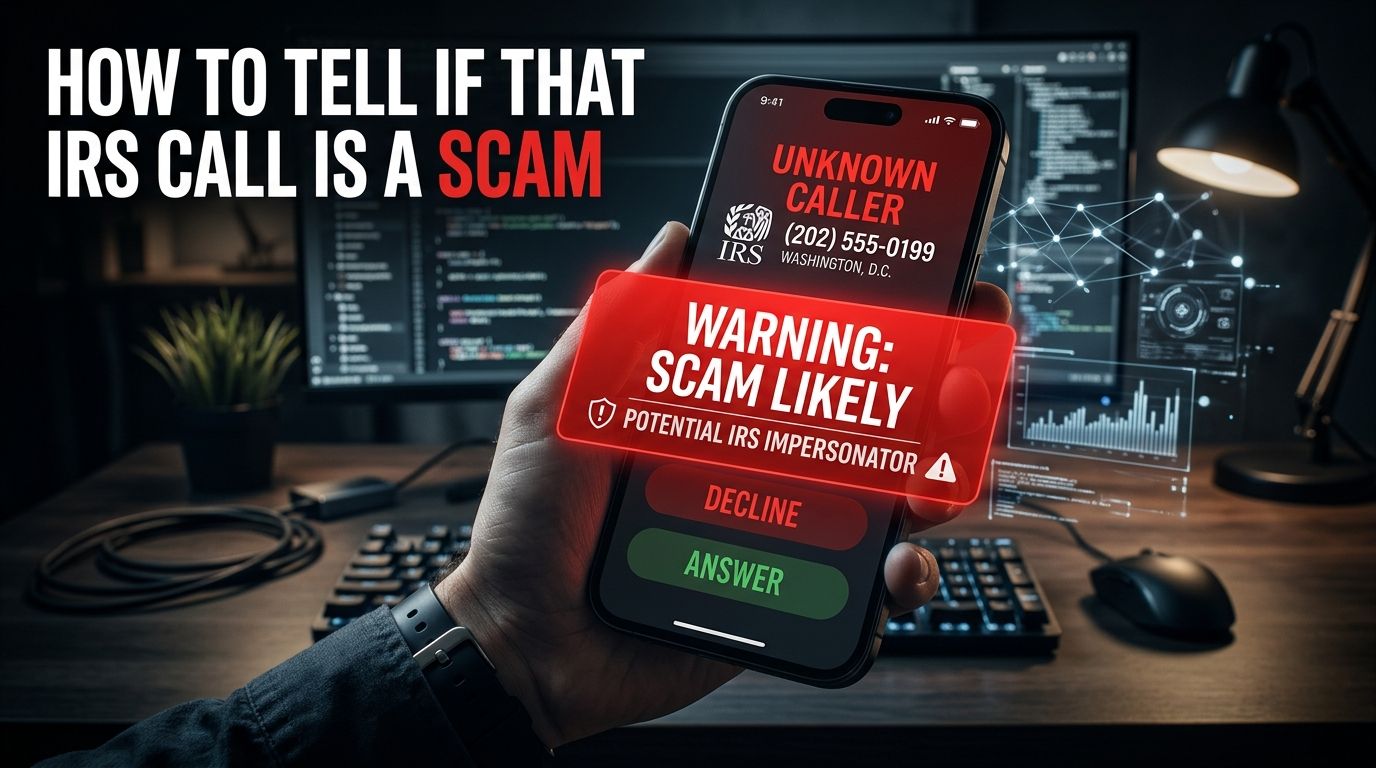
Fraudulent callers often alter their caller identification details to make a fake IRS phone call look authentic. Your phone screen might display the official agency name or a Washington D.C. area code. Scammers use simple computer software to spoof these numbers and gain your immediate trust. You should never rely on the incoming caller ID screen to verify who is calling.
Criminals running an IRS phone scam will also insist that you stay on the line while driving. They do not want you to hang up because you might consult a trusted family member. By keeping you on the telephone, they maintain total control over your actions and decisions. If a caller refuses to let you hang up or consult a professional, end the call immediately.
The caller will often ask you to read back private personal details to verify your identity. They might demand your Social Security number, bank account details, or credit card numbers. Official agents will already have your account records on file and will not ask for sensitive details over an incoming call. Sharing this private data opens the door to identity theft and financial loss.
What to Do If You Get a Call Like This
The most effective action you can take when receiving a suspicious phone call is to hang up immediately. You do not owe the caller an explanation, an argument, or a polite closing statement. Ending the call instantly cuts the criminal's line of influence and gives you time to calm down. Never confirm your Social Security number or financial details during the conversation.
After hanging up, verify your actual tax status directly through official government tools and resources. Open your web browser and navigate directly to the official government portal at IRS.gov. You can log into your secure online account to view your actual balance and official notices. Alternatively, call the official customer service phone number listed on the government website to speak with an agent.
Never use any phone number provided by the caller or left in a voicemail message. Scammers frequently set up fake call centers to confirm their own fraudulent claims when you call back. Always look up contact details independently through official federal websites or past official tax documents. Taking a few minutes to verify the situation protects your hard-earned money from digital fraud.
Where to Report an IRS Scam Call
Reporting fraudulent phone calls helps federal authorities track down organized criminal networks and protect consumers. You can submit a detailed report directly to the Treasury Inspector General for Tax Administration online. This specialized oversight agency investigates government impersonation schemes and works to shut down fraudulent call operations.
You should also file a complaint with the Federal Trade Commission through their official safety website. Include any relevant details you remember, such as the caller's phone number and the specific demands made. These reports help law enforcement map out criminal patterns and warn the general public about emerging tricks.
Protect Your Money From Imposter Scams
Identifying fake tax collection calls comes down to staying calm and recognizing the standard warning signs. The federal government will never demand instant gift card payments or threaten you with sudden arrest. When you understand how official agencies communicate, you can handle these stressful calls with total confidence.
Never let an aggressive caller force you into making hasty decisions with your money. If you receive a suspicious call or text message, check the details independently using reliable safety tools. You can test suspicious phone numbers or web addresses using our free VastOutlet Threat Rating Engine. Visit https://www.vastoutlet.com/rating-engine to scan suspicious details and protect your financial future today.
Worried this happened to you?
Our Threat Rating Engine can analyze suspicious URLs, email addresses, or cryptocurrency wallets associated with potential scams.
Scan suspicious linkarrow_forwardProtecting Your Digital footprint
Once you have identified these threats, taking immediate action is essential. Do not delay banking checks or changing passwords. By locking down your account security policies and setting up credit monitoring blocks, you can completely isolate yourself from modern credential-harvesting networks.