
Is That Job Offer Real? 7 Signs of a Job Scam
Spotting a fake job offer scam protects your bank account and personal data while searching for employment online. The rapid growth of remote employment created fresh opportunities for job seekers across the globe. Digital thieves actively exploit this hiring environment by publishing fake job listings on public career portals. They target eager applicants who hope to secure remote work or entry-level positions quickly.
Receiving an unexpected job offer brings excitement, but moving forward without checking details creates severe financial risks. Scammers construct realistic corporate identities to harvest Social Security numbers and trick victims into sending funds. Learning how to inspect incoming employment communications keeps your personal identity and savings completely secure. This guide covers seven distinct warning signs to check before accepting any unverified position.
1. Why is an offer sent without a real interview a fake job offer sign?
Receiving a formal job offer after completing only a brief questionnaire or text message exchange is a major red flag. Legitimate businesses evaluate prospective employees through structured interview steps before making employment commitments. They conduct video conversations, telephone interviews, or in-person meetings to assess applicant skills and professional background. When an employer skips these standard evaluation steps, the job opportunity is almost certainly fraudulent.
Scammers rush the hiring process because they want to capture your personal details before you investigate their claims. They issue immediate job offers to create excitement and lower your natural caution. They might claim their hiring team reviewed your online resume and selected you immediately for a high-paying position. Real corporate hiring managers never hire unknown candidates without speaking to them directly first. If an organization offers you employment without conducting a formal interview, walk away immediately.
2. Why is communication restricted to text apps a remote job scam indicator?
Pay close attention to the communication channels an employer uses during your initial hiring conversations. Authentic corporate recruiters send official messages from corporate email servers or speak directly over standard telephone lines. Scammers prefer to conduct all interviews and onboarding instructions through anonymous messaging applications. They use free messaging apps because these platforms allow them to hide their physical location and identity.
Using private messaging apps allows criminals to operate without leaving traceable corporate records. They will instruct you to download a specific messaging app and join a private text chat room for your interview. The interviewer sends written text questions and issues an employment contract within thirty minutes. Legitimate organizations maintain formal communication standards throughout their entire hiring workflow. If a recruiter refuses to speak over the telephone or conduct video calls, end the conversation right away.
3. Why is paying upfront for training or equipment a clear red flag?
A demand for upfront payment to secure employment is a definitive sign of an online job scam. Criminals instruct new hires to purchase specialized office software, laptop hardware, or mandatory training materials before starting work. They claim you must send funds to their designated vendor to receive your official home office setup. Once you transfer the requested funds, the seller disappears and the job offer evaporates completely.
Legitimate employers supply necessary work equipment directly to your home address or reimburse verified business expenses after onboarding. They never require prospective employees to pay application fees, background check costs, or equipment deposits out of pocket. If a recruiter insists that you must send money to begin working, stop all communication immediately. Demanding money from a job applicant violates standard business practices across every legitimate industry.
4. Why does an overpayment check scheme reveal a job offer scam?
The fake check overpayment scheme is one of the most destructive tricks used by fraudulent employers. The fake employer sends you a physical check or digital image of a check to cover home office supplies. They instruct you to deposit the check into your personal bank account using your mobile banking application. Next, they direct you to wire a portion of those funds back to a specific equipment vendor.
Your bank may make the deposited funds available in your account balance within a few business days. However, full check clearing takes several weeks between financial institutions behind the scenes. When the initial check eventually bounces as a fake document, your bank deducts the full amount from your balance. You remain personally responsible for all wired funds sent to the scammer. Never deposit checks from unknown employers or transfer funds to external third parties on their behalf.
5. Why does an email domain mismatch signal a fake employment offer?
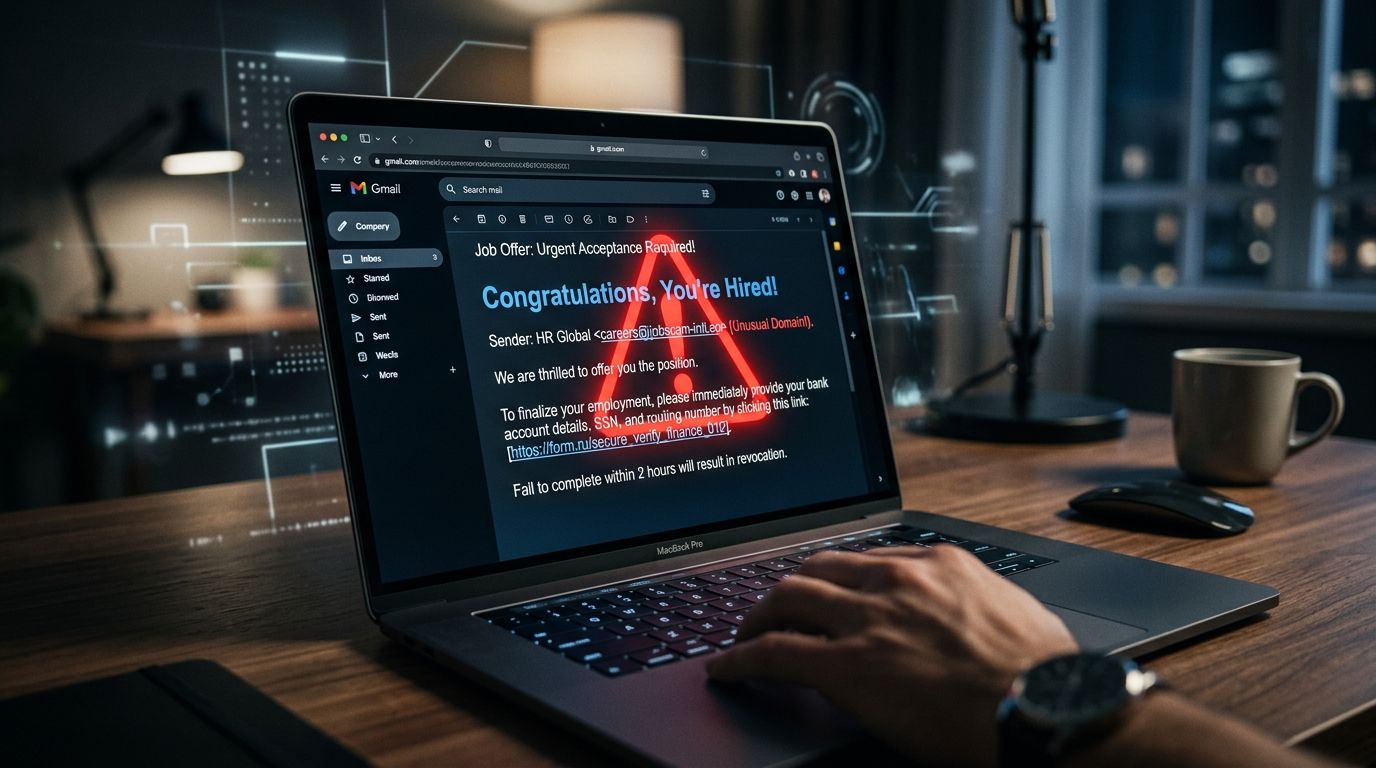
Inspecting the exact sender email address provides immediate proof of an employer's authenticity. Authentic corporate recruiters send messages from email domains that match their official corporate website address exactly. Digital thieves register lookalike web domains that add minor words, hyphens, or subtle letter swaps to corporate brand names. They might use free public email services like Gmail or Yahoo to send official employment offers.
Open the email header details on your device screen and inspect the text following the address symbol carefully. If a recruiter claims to represent a major corporation but sends emails from a generic web domain, pause immediately. Open a new browser tab and type the official company web address directly into your address bar to compare domain structures. If the sender address does not match official corporate records, you are communicating with an imposter.
6. Why does high pay for minimal experience indicate a fraudulent role?
Unusually high compensation packages offered for basic, entry-level duties should always trigger immediate skepticism. Scammers publish job descriptions promising thousands of dollars per week for simple tasks like reshipping packages or processing basic data. They design these high salary figures to attract job seekers who face financial stress or need fast income. They know that an attractive salary offer makes applicants more willing to overlook obvious operational errors.
Compare the offered compensation rate against standard industry benchmarks for similar roles in your local job market. If a position offers executive-level pay for entry-level data entry work, evaluate the opportunity with extreme caution. Legitimate companies align their salary structures with established market rates and require relevant professional experience. When a job offer promises extraordinary earnings for minimal effort, the opportunity is almost certainly a financial trap.
7. Why is sensitive personal data requested early a major warning sign?
Requesting sensitive personal identification numbers before providing a formal employment contract is a major identity theft risk. Scammers ask for your Social Security number, banking details, or passport copy during initial chat conversations. They claim they need these private details immediately to run routine background checks or establish direct deposit profiles. Providing this private data allows criminals to open fraudulent credit accounts or steal your identity.
Legitimate employers request sensitive tax details and banking information only after you accept a formal, written job offer. They collect these records through secure corporate onboarding portals rather than basic text messages or unencrypted email forms. Never share your Social Security number, card details, or account passwords during initial interview conversations. Protecting your personal records requires maintaining strict boundaries until you confirm the business exists legally.
How to Verify a Job Offer Is Real
Learning how to verify a job offer requires conducting independent research before sharing personal information or accepting employment. Start by opening your web browser and typing the company name alongside terms like scam, review, or complaint. Search for the official corporate website independently rather than following links provided in unannounced text messages. Navigate to the official company careers page to confirm the specific job listing exists on their portal.
You should also verify the identity of the specific recruiter who contacted you about the position. Look up the person on professional networking sites to confirm they work for the organization in a real hiring capacity. Locate the official phone number listed on the company homepage and call their primary office directly. Ask to speak with the human resources department to confirm that the job offer originated from their staff. Taking ten minutes to verify these details keeps your personal finances and identity completely safe.
Protect Your Job Search from Fraudulent Offers
Finding legitimate employment requires staying calm and checking details through official communication channels. Digital thieves depend on artificial excitement, high salary offers, and fast deadlines to trick job seekers. When you know how to inspect sender domains, verify interviews, and reject upfront payments, you search with confidence. Never feel pressured to send funds or share private records to secure a job opportunity online.
You do not have to guess whether a company website or job offer communication is safe to trust. You can test suspicious web addresses and contact details using our free digital safety scanner before responding. Visit the VastOutlet Threat Rating Engine at https://www.vastoutlet.com/rating-engine to scan unverified web links today. Taking ten seconds to verify an employer keeps your hard-earned savings and personal data protected.
Worried this happened to you?
Our Threat Rating Engine can analyze suspicious URLs, email addresses, or cryptocurrency wallets associated with potential scams.
Scan suspicious linkarrow_forwardProtecting Your Digital footprint
Once you have identified these threats, taking immediate action is essential. Do not delay banking checks or changing passwords. By locking down your account security policies and setting up credit monitoring blocks, you can completely isolate yourself from modern credential-harvesting networks.