
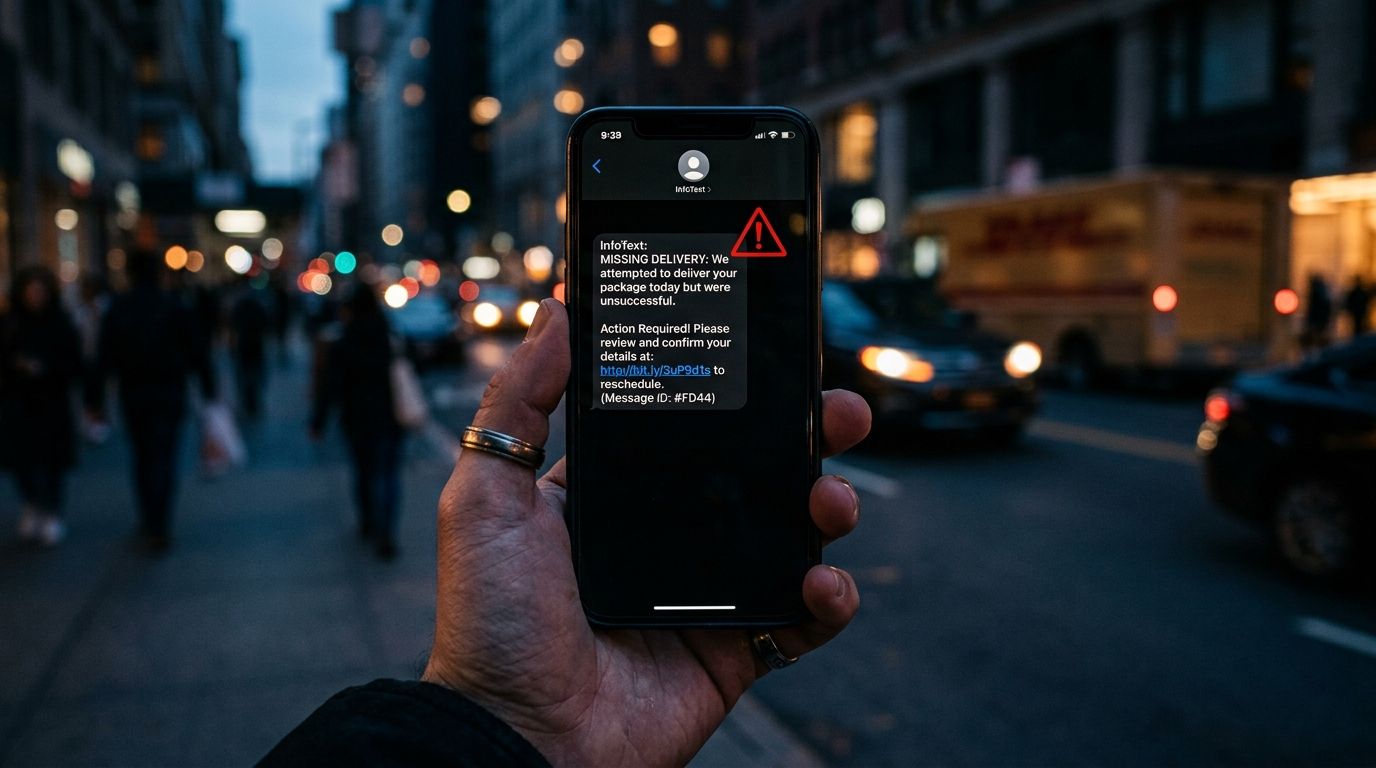
The Fake Delivery Text Scam: 6 Red Flags to Watch For
Recognizing a fake delivery text scam protects your personal bank account from automated digital thieves. Millions of consumers receive unexpected package tracking notifications on their mobile devices every day. Digital criminals exploit this high shipping volume to send deceptive alerts about delayed items or missed deliveries. They hope a sudden notification about a misplaced box will trick you into clicking malicious links.
These fraudulent alerts impersonate major shipping carriers like USPS, FedEx, UPS, and DHL to build immediate trust. Learning how to check these incoming alerts keeps your private banking data secure across every carrier network. This guide covers six clear red flags to check before interacting with any unexpected message. Taking a few moments to inspect incoming text alerts will keep your money completely safe.
1. Why is a request for a small redelivery fee a warning sign?
A demand for a small payment to release an on-hold package is one of the clearest signs of fraud. Criminals often send text messages claiming your parcel cannot be delivered until you pay a tiny fee. The requested amount is usually low, often ranging between one and three dollars. Scammers choose a small dollar amount so the charge feels harmless to an unsuspecting reader.
The primary goal of this fake shipping text tactic is not the small fee itself. Instead, the scammers want to capture your full credit card number, expiration date, and security code. Once you enter your payment details on their fraudulent web form, they sell or misuse your credentials. Real shipping carriers never demand immediate credit card payments over a simple text message to complete a home delivery. If an incoming message asks for money to update shipping preferences, delete the message right away.
2. Why do scam delivery links use shortened or misspelled web addresses?
Examining the web address inside a suspicious text message reveals the origin of the alert. Legitimate postal carriers direct customers to their official web domains to manage package deliveries. Scammers build lookalike domains that mimic official brand names by changing or rearranging a few letters. They might also use free link shortening services to hide the true destination of the web page.
A package delivery scam text uses these altered addresses to bypass security filters on modern mobile phones. When you tap a shortened link, your mobile browser redirects to an unverified third-party page. This destination page is designed to capture your login credentials or download background spyware to your phone. Always inspect the exact web address before tapping any link included inside an incoming message. If the web domain does not match the official address of the shipping carrier, do not open it.
3. Why is a text missing a recognizable tracking number suspicious?
Genuine notifications from commercial shipping carriers include specific details about your incoming shipment. Official automated texts list a valid tracking number and name the merchant who dispatched the item. They provide clear reference data so you can verify the order against your recent online purchases. Fraudulent texts omit these details because criminals send mass messages to millions of phone numbers simultaneously.
When an incoming alert uses vague wording like your package or your recent order, pause and evaluate the message. A smishing delivery scam relies on generic templates because the sender does not know your actual shopping history. They hope you currently expect a shipment and will assume the message applies to your package. If a delivery text lacks a specific tracking code or retailer name, treat the notification with extreme suspicion.
4. Why do scammers claim your package will be returned in hours?
Artificial urgency is a core psychological tactic used across almost every digital theft scheme. Criminals claim that your shipment will be permanently returned to the original sender within twelve hours if you fail to respond. They use aggressive warnings about lost items or forfeit goods to create immediate panic. They know that a worried recipient is much more likely to react without checking the sender details.
Major delivery networks do not destroy or return packages based on a single ignored text message. Official carriers leave physical paper notices at your door or hold items at local distribution centers for several days. They provide clear, reasonable windows for customer responses through established support portals. When a text message threatens rapid package forfeiture unless you act immediately, step back and ignore the artificial timer.
5. Why should you never enter card details on a link from a text?
Entering sensitive payment details on a page reached through an unverified text link exposes your financial assets to theft. Scammers construct fake tracking portals that look identical to official carrier sites, complete with copied logos and brand colors. These fake portals present a form asking for your credit card details, billing address, and Social Security number. Entering your private information on these forms hands direct access to your bank account to cybercriminals.
Legitimate shipping companies process address updates and redelivery requests inside secure customer account portals. They do not require full payment card numbers or sensitive personal identifiers to update standard street addresses. If a web page demands your full card details to resolve a simple delivery issue, close the tab immediately. Protecting your payment details requires accessing support systems directly rather than following links inside incoming messages.
6. Why is a standard ten-digit sender number a red flag?
Inspecting the phone number of the sender provides immediate clarity about the origin of the message. Commercial carriers send automated updates through official short codes, which are five-digit or six-digit telephone numbers. These short codes are registered through national telecommunication registries and monitored for corporate compliance. If an incoming shipment text arrives from a standard ten-digit personal phone number, you are looking at an unverified sender.
Digital thieves use simple computer software to send mass text messages from random ten-digit numbers. On mobile devices, you can tap the top sender icon to view the full phone number behind the contact name. If the incoming text displays a regular residential area code or an unfamiliar personal cell number, do not reply. Commercial shippers do not send automated account updates from private personal mobile devices.
How to Check If a Delivery Text Is Real
Verifying package delivery alerts comes down to using independent verification channels rather than interacting with the text. Open a clean browser window on your device or launch the carrier's official mobile application independently. Type the tracking number directly into the official search portal to verify the current status of your shipment. If the tracking number is valid, the official system will display exact location logs and delivery estimates.
You can also log into the specific shopping apps where you recently placed online orders. Check your active purchase history to confirm which carrier is handling your delivery and retrieve the official tracking code. If your shopping dashboard shows normal progress and no alerts exist, the text message was completely fraudulent. Checking your orders directly removes all financial risk and keeps your private accounts secure.
Protect Your Accounts from Delivery Text Scams
Handling unexpected package notifications requires remaining calm and checking details through official channels. Scammers depend on sudden fear and artificial urgency to force rapid decisions with your money. When you know how to inspect sender numbers and verify package tracking directly, you protect your digital life. Never feel pressured to tap unverified links or share private financial information over an unannounced text message.
You do not have to guess whether an incoming tracking link or web domain is safe to tap. You can test suspicious web links using our safety scanner before opening them on your phone. Visit the VastOutlet Threat Rating Engine at https://www.vastoutlet.com/rating-engine to scan suspicious web addresses today.
Worried this happened to you?
Our Threat Rating Engine can analyze suspicious URLs, email addresses, or cryptocurrency wallets associated with potential scams.
Scan suspicious linkarrow_forwardProtecting Your Digital footprint
Once you have identified these threats, taking immediate action is essential. Do not delay banking checks or changing passwords. By locking down your account security policies and setting up credit monitoring blocks, you can completely isolate yourself from modern credential-harvesting networks.