
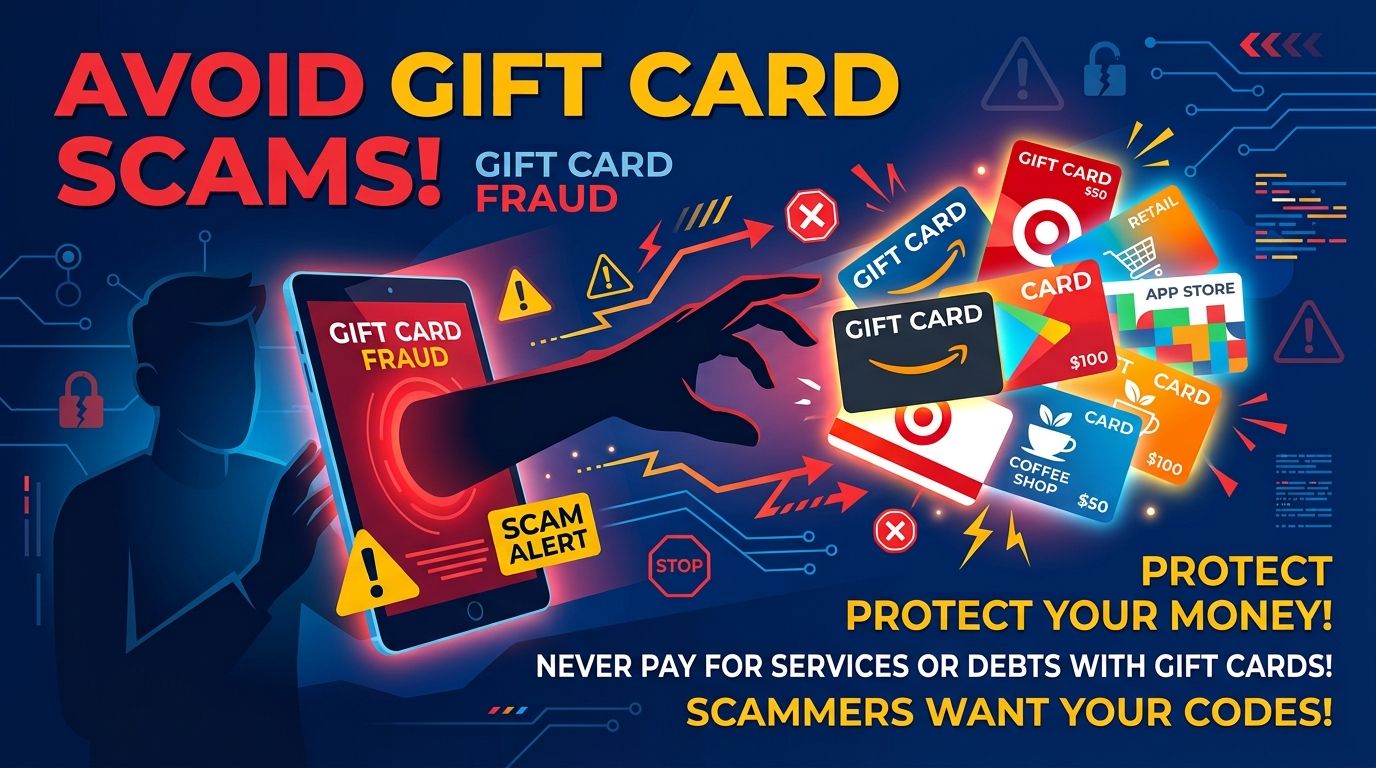
The Gift Card Scam Explained: Why Scammers Always Ask for Gift Cards
You need the gift card scam explained clearly before a digital thief targets your hard-earned savings with a fake payment demand. Every day, thousands of online shoppers receive urgent requests to purchase retail store cards to resolve unexpected financial issues. These messages look highly convincing at first glance.
However, buying a card to pay a stranger is always a sign of fraud. This guide exposes the exact patterns behind these fraudulent requests to keep your bank account safe. You will learn why thieves prefer this payment method over normal bank transfers.
Why is the gift card scam explained as the ultimate digital theft trick?
Legitimate retail cards are designed as simple, thoughtful presents for friends and family. However, digital criminals misuse these safe products because they function exactly like untraceable cash. Once you purchase a card, the value is stored on a simple code printed on the back. When you share this sequence of numbers, the money moves to the thief within seconds. The transaction occurs instantly over the phone or through an online chat window.
Normal bank accounts have safety guards to stop fraudulent transactions. If you send a wire transfer by mistake, your financial institution can sometimes freeze the funds. Credit card companies also offer strong protection policies to dispute unauthorized charges. None of these consumer protections exist for retail gift cards. The moment the criminal redeems the code, your funds are permanently gone.
There is no central fraud department to call to reverse the payment. Scammers also appreciate how easily they can hide their identities when using these cards. They can quickly spend the balance online to buy expensive electronics or luxury items. Alternatively, they sell the codes on unregulated secondary web markets for cash.
This secondary market makes tracing the digital path of the stolen money incredibly difficult for local police. The entire operation is fast, clean, and highly profitable for organized criminal groups. Unlike banking systems, retail cards do not require identity verification at purchase. Anyone can buy them with cash at a local grocery store or gas station.
This anonymity allows the thief to remain completely invisible behind a computer screen. They never have to reveal their real name, location, or bank details. This lack of physical footprint makes them incredibly attractive to international networks. They exploit these digital loopholes to drain your savings without leaving any immediate trace.
Who Scammers Pretend to Be When Asking for Gift Cards
To convince you to buy these cards, criminals assume highly authoritative roles. They often pretend to be agents from government tax offices. They might call you out of the blue to claim you owe unpaid taxes. These fake agents threaten you with immediate arrest or court dates if you do not pay. Other fraudsters pretend to represent local utility companies.
They claim your electricity or water will be cut off in an hour unless you settle a balance. The fake tax collector will use threatening language to make you feel powerless. They might state that local police are already driving to your house. They use mock badge numbers and transfer your call to fake managers to build authority.
These elaborate setups are designed to overwhelm your logical thoughts. The sudden pressure causes many people to comply with their strange payment demands. Another common tactic involves corporate impersonation within your own workplace. Scammers send emails pretending to be your company boss or a senior executive.
This is a common gift card payment scam where the fake supervisor claims they need cards for a client presentation. They ask you to purchase them quickly and send photos of the codes. Because you want to help your employer, you might act before checking the email address.
Criminals also target your emotions by pretending to be romantic partners or technical experts. In online dating scenarios, a fake partner will invent a sudden medical emergency or a travel crisis. They ask for gift codes to cover these unexpected bills. In tech support setups, scammers show fake error screens on your computer. They claim your device has viruses and demand card numbers to perform security repairs.
The Warning Signs to Watch For
The most obvious warning sign is a sudden, extreme demand for speed. Legitimate businesses or state agencies will always offer you multiple weeks to pay a bill. Scammers cannot wait because they want to steal your money before you start thinking. They will create high-stress scenarios to make you feel panicked.
They might demand that you drive to a store immediately while keeping them on the phone. This continuous call prevents you from asking a family member for advice. You should also pay close attention to the payment instructions. A fraudster will tell you that retail cards are the only accepted way to settle your issue.
This claim is always false. No real business or government body accepts department store vouchers to pay taxes or bills. They will also specify exactly which stores you must visit. They might even tell you to buy cards in specific dollar amounts to avoid triggering store security alarms.
Scammers often direct you to specific large-box retailers. They know these stores always stock a massive selection of popular gift vouchers. They will tell you to purchase multiple cards worth five hundred dollars each. This specific denomination keeps each individual transaction under the store limit that triggers manager approval.
By keeping the purchase amounts low, the criminal avoids attracting attention from alert store staff. The final red flag occurs when they ask for the security numbers. The person on the phone will instruct you to scratch off the silver coating on the back. They will ask you to read the numbers aloud or text a clear photograph of the card.
Legitimate retailers only require these codes when you are actively making a purchase on their official site. If a stranger asks for these private numbers, you are experiencing gift card fraud. Store cashiers are often trained to spot these fraudulent patterns at the register. If a cashier asks why you are buying a large volume of cards, be honest with them.
They are trying to protect your bank account from common traps. If the person on the phone tells you to lie to the cashier, hang up immediately. This instruction proves that the caller is a criminal attempting to steal your savings. Take a breath and walk out of the store to secure your money.
What To Do If You Have Already Shared a Gift Card Code
If you realize you have shared card details with a scammer, you must act within minutes. First, find the physical card or the purchase receipt. Look on the back of the card to find the customer support phone number for the retailer. Call this number immediately and ask for the fraud department.
Tell them that a criminal tricked you into buying the card and sharing the codes. The support agent will ask for the specific card numbers and transaction details. If you call fast enough, the company might be able to freeze the remaining balance. They can sometimes transfer the leftover funds to a new, secure card.
However, this recovery is never guaranteed. If the thief has already spent the balance, the retail company cannot refund your money. Acting quickly is your best option to reduce your financial loss. Next, you should report the crime to official government agencies.
In the United States, file a detailed complaint with the Federal Trade Commission. You can easily do this online through their official safety portal. In the United Kingdom, you can report the incident directly to Action Fraud. While these agencies cannot retrieve your cash, your report helps authorities track down organized networks.
Sharing this information protects other consumers from falling into the same trap. Be highly skeptical of online services that claim they can recover stolen gift card funds. These are often secondary traps run by the exact same criminals. They will ask for an upfront fee to hack the scammer or trace the codes.
Real safety analysts will never charge you to investigate a fraud report. If a company demands money to recover your lost gift codes, block them immediately. Save your energy and report the incident through the proper official channels instead.
Protect your assets from payment scam tricks
Understanding why do scammers ask for gift cards is the first step toward securing your personal finances. These vouchers are meant for celebrations, not for paying debts or clearing legal issues. When you slow down and examine the situation calmly, the red flags become easy to identify. Never let an urgent phone call or a threatening email force you into making a fast purchase.
Trust your instincts when a payment request feels strange or unnatural. If you are unsure about an email, a website, or a contact detail, verify it before taking action. We built a free digital safety tool to help you make smart choices. You can easily test any suspicious web address or contact detail using the VastOutlet Threat Rating Engine.
Simply visit the VastOutlet Threat Rating Engine at https://www.vastoutlet.com/rating-engine to run a quick scan on your mobile device or computer. Spending ten seconds to check a link keeps your hard-earned money entirely safe. Safe habits combined with simple safety tools will keep your financial life secure.
Worried this happened to you?
Our Threat Rating Engine can analyze suspicious URLs, email addresses, or cryptocurrency wallets associated with potential scams.
Scan suspicious linkarrow_forwardProtecting Your Digital footprint
Once you have identified these threats, taking immediate action is essential. Do not delay banking checks or changing passwords. By locking down your account security policies and setting up credit monitoring blocks, you can completely isolate yourself from modern credential-harvesting networks.