
The Zelle Scam Everyone's Falling For (And How to Avoid It)
Falling victim to a zelle scam has become one of the fastest growing financial threats facing everyday online banking customers today. Millions of consumers use instant payment apps to transfer money to friends, family members, and trusted coworkers every single afternoon. Digital criminals actively exploit this rapid delivery speed to steal thousands of dollars directly from private checking accounts. Because transfers move funds between separate financial institutions within seconds, victims rarely have time to stop a fraudulent transaction. Taking time to understand how these clever tricks operate keeps your personal bank account completely safe from sudden digital theft.
The Most Common Zelle Scam: The Fake Bank Fraud Alert
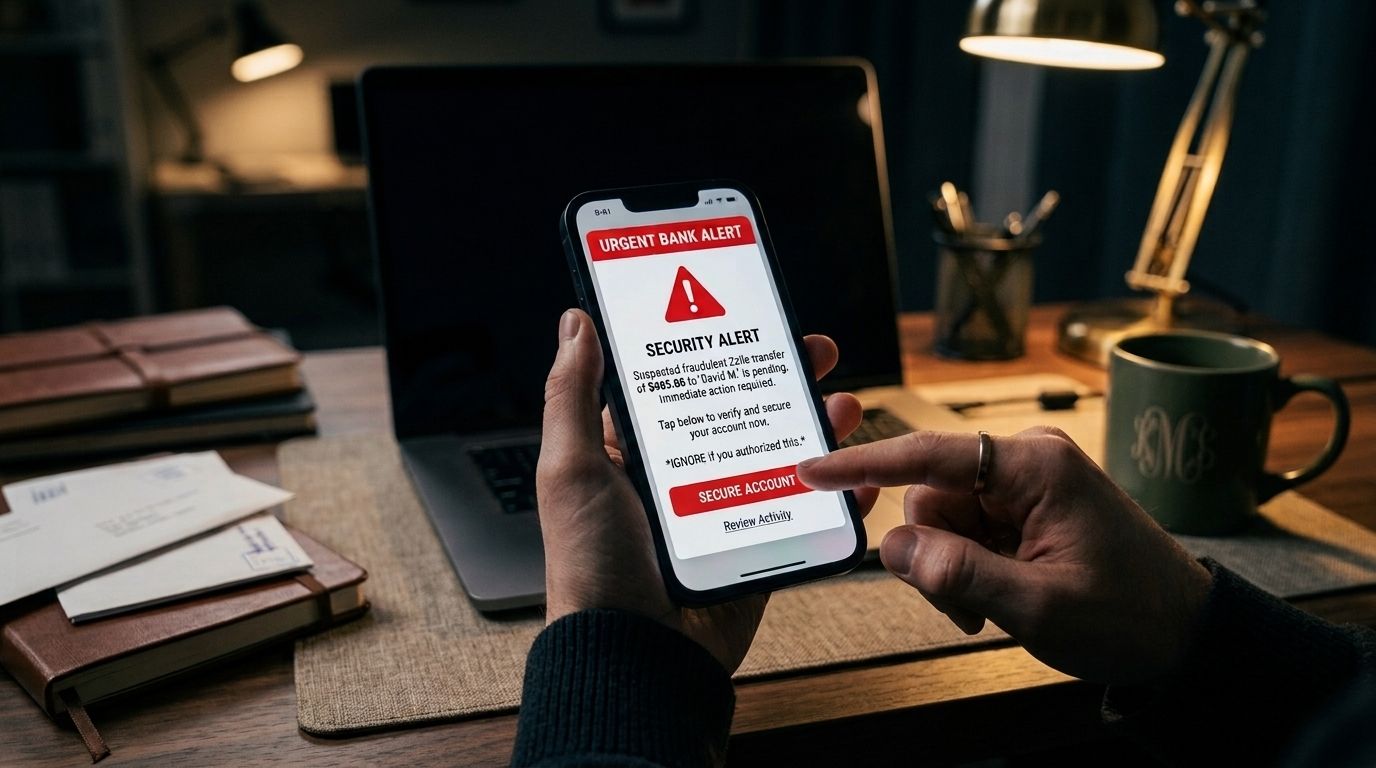
The most dangerous variation of this trick relies on a high-pressure bank impersonation Zelle scam to deceive account holders. The scheme usually begins with an unannounced text message that appears to originate directly from your financial institution. The fake text alert asks if you authorized a large purchase at a distant retail store or online merchant. When you reply to deny the charge, your telephone rings almost immediately from a caller claiming to represent bank security. A polite representative claims to work in your bank fraud department and offers to help secure your account right now.
The caller speaks with quiet authority and uses technical administrative terms to make the situation feel authentic. They might even spoof your local bank phone number on your incoming caller ID screen to gain your trust. To build instant credibility, they read back your real legal name, home address, or debit card numbers gathered online. They inform you that a thief is actively attempting to drain your checking account balance at this exact moment. They insist that you must act immediately to stop the illegal transfer before your funds disappear permanently.
The fake agent instructs you to open your mobile banking application and navigate directly to the payment menu. They tell you to send a payment to your own mobile phone number or personal email address. They claim this specific transfer will reverse the fake charge and protect your remaining account balance from theft. In reality, the scammer links your personal phone number or email address to their own external account behind the scenes. When you confirm the transfer on your phone screen, you send your real money straight to the criminal.
You honestly believe you are simply moving money between your own private accounts to prevent a security breach. By the time you realize the caller was an imposter, the thief has cashed out the funds completely. The entire telephone conversation is engineered to bypass your natural caution through artificial urgency and sudden panic. Recognizing this specific fake alert pattern prevents you from handing your hard-earned savings to an online thief.
Why Zelle Scams Are So Hard to Reverse
Victims who lose money to these schemes quickly discover that obtaining a Zelle scam refund is extremely difficult. Instant payment networks are specifically engineered to settle transactions between financial institutions within a few seconds. Unlike traditional paper checks, credit card payments, or international wire transfers, there is no waiting window for funds to clear. The moment you press the confirm button on your screen, the digital cash arrives in the recipient account immediately.
Federal consumer protection regulations protect bank customers against unauthorized transactions on credit cards or checking accounts. An unauthorized transaction occurs when a digital thief steals your card credentials and spends your money without your permission. However, when you enter your password and approve a transfer yourself, financial institutions view the payment as authorized. Even though an imposter lied to you about the situation, you physically approved the payment transfer on your device.
Because you authorized the transfer yourself, your bank may treat the payment like handing physical cash to a stranger. Financial institutions are often unable to pull back funds once the recipient account owner transfers or withdraws the cash. This legal and technical distinction leaves many honest victims without any clear way to recover their stolen savings. Understanding this strict reversibility boundary helps you treat instant digital transfers with the same caution as physical cash.
Other Common Zelle Scam Variations
In addition to fake bank security alerts, digital thieves use several other creative setups to target everyday users. Online marketplace scams frequently target innocent sellers who list personal items for sale on public classified websites. A fake buyer offers to purchase your listed item and claims they sent an overpayment by accident. They send a fake email notification demanding that you refund the extra funds immediately using an instant app.
Fraudulent landlords also use instant payment networks to steal deposit money from people searching for rental housing. They publish fake apartment listings online using stolen photos of real residential homes at discounted monthly rental rates. They insist that you must send a security deposit immediately to reserve the rental before viewing the property in person. Once you transfer the deposit money, the fake landlord deletes the listing and stops answering your messages.
Romance scammers also trick victims into sending instant digital payments to clear manufactured personal emergencies overseas. They build trust over several weeks before claiming they face sudden medical bills or frozen travel accounts. No matter what compelling story a contact tells, demanding instant app payments is always a major warning sign. Recognizing these varied setups protects your hard-earned savings across every digital platform you use.
How to Avoid Falling for a Zelle Scam
Many everyday online shoppers ask is Zelle safe for completing transactions with people they meet on public platforms. The short answer is that instant payment networks are designed solely for transferring money to trusted friends and family. You should treat instant digital payments exactly like handing physical paper cash to someone on the street. Never use instant transfer applications to pay online strangers for retail goods, rental deposits, or unverified services.
If you receive an unexpected text or call from someone claiming to represent your bank, hang up immediately. Never call back the phone number provided inside an unannounced text message or sudden voicemail message. Turn your physical debit or credit card over and dial the official customer service number printed on the back. Speaking directly with verified bank staff allows you to check your account status safely without taking any risks.
Remember that legitimate bank employees will never call you to request an instant payment or verification code. They will never instruct you to send money to yourself or anyone else to fix a security issue. If a caller insists that you must complete a transfer right now, end the call right away. Taking a few quiet moments to verify incoming alerts independently keeps your checking account completely secure.
Protect Your Accounts From Digital Fraud
Avoiding instant payment traps comes down to remaining calm and verifying alerts through official communication channels. Digital thieves rely on artificial urgency and fake emergencies to trick you into making hasty choices with your money. When you treat instant transfers like physical cash and verify caller claims independently, you protect your savings with total confidence.
Never feel pressured to send funds or share security codes over an unannounced phone call or message. You can test suspicious payment links or contact details using our free digital safety scanner before sending any money. Visit the VastOutlet Threat Rating Engine at https://www.vastoutlet.com/rating-engine to scan unverified contact details today. Taking ten seconds to check an incoming request keeps your hard-earned money completely safe.
Worried this happened to you?
Our Threat Rating Engine can analyze suspicious URLs, email addresses, or cryptocurrency wallets associated with potential scams.
Scan suspicious linkarrow_forwardProtecting Your Digital footprint
Once you have identified these threats, taking immediate action is essential. Do not delay banking checks or changing passwords. By locking down your account security policies and setting up credit monitoring blocks, you can completely isolate yourself from modern credential-harvesting networks.